
Low-Stress Jobs That Pay Well Without a Degree: 8 Strong Options for 2026

If you are searching for low-stress jobs that pay well without a degree, the strongest 2026 options are mostly in healthcare, transportation inspection, aviation maintenance, rail infrastructure, and IT support. The catch: “no degree” does not always mean “no training.” Several of the best-paying roles require an associate degree, certificate, license, or on-the-job training, but not a four-year bachelor’s degree.
People researching high-paying, low-stress jobs without a degree should compare the training path as carefully as the salary. Some roles are true high-school-entry jobs, while others need a certificate, license, or two-year degree.
TL;DR
In short: these low-stress careers combine strong U.S. median pay with entry paths that do not require a four-year bachelor’s degree.
- Highest median pay: Radiation therapist at USD 105,310.
- Best no-college options: Transportation inspector and signal and track switch repairer.
- Best if a two-year program is realistic: Radiation therapy, dental hygiene, sonography, and MRI technology.
The table below compares all eight options using May 2025 U.S. Bureau of Labor Statistics data.
Get the free Job Search Playbook
Stop relying on crowded job boards. Get the free 7-day playbook with practical tools, outreach scripts, and a step-by-step plan to find better opportunities.
| Role | 2025 U.S. median pay | Typical entry path | Main stress catch |
|---|---|---|---|
| Radiation therapist | USD 105,310 | Associate degree + licensing/certification in most states | Patient-facing cancer care |
| Dental hygienist | USD 98,100 | Associate degree + state license | Repetitive physical work and patient contact |
| Diagnostic medical sonographer | USD 96,590 | Associate degree or postsecondary certificate | Patient positioning, standing, possible hospital shifts |
| MRI technologist | USD 95,480 | Associate degree + related experience | Some evening, weekend, or overnight work |
| Signal and track switch repairer | USD 92,460 | High school diploma + moderate-term on-the-job training | Safety-critical rail infrastructure work |
| Transportation inspector | USD 92,100 | High school diploma + moderate-term on-the-job training | Regulatory responsibility and field work |
| Avionics technician | USD 82,280 | Usually a postsecondary nondegree program; some enter through high school + training | Noise, precision, and possible nights/weekends |
| Computer network support specialist | USD 76,220 | Often associate-level training; some qualify with high school + IT certifications | Troubleshooting pressure and possible off-hours coverage |
These are national median wages, not guaranteed starting salaries. Pay varies by location, employer, shift, experience, and credentials.
What “low stress” means in this list
There is no universal low-stress job. A role that feels calm to someone who loves routines can feel unbearable to someone who hates repetition.
For this article, we focused on work that can offer clear duties, less sales pressure, structured routines, and realistic entry paths. We also checked current U.S. Bureau of Labor Statistics data for pay, education, and work conditions.
The best low-stress jobs that pay well without a degree still come with trade-offs. Low-stress work is usually about finding the kind of pressure you can handle, not avoiding pressure completely.
Common stress types include:
- People stress: conflict, complaints, constant customer interaction
- Schedule stress: nights, weekends, changing shifts, being on call
- Urgency stress: emergencies and tight deadlines
- Physical or safety stress: heavy equipment, injury risk, repetitive strain
Lists of low-stress, high-paying jobs often hide these trade-offs. Treat them as a starting point, not a promise.
1. Radiation therapist
Median pay: USD 105,310
Typical education: Associate degree
Best for: People who want structured healthcare work and can handle patient-facing care
Radiation therapists deliver prescribed radiation treatments to patients, usually in hospitals, physician offices, or outpatient centers. They typically have a regular work schedule because treatments are usually planned in advance.
That does not make the job emotionally easy. Patients may be dealing with cancer or other serious illnesses, and safety procedures matter. Most states also require licensing or certification.
This can suit someone who wants a stable clinical routine and can handle patient-facing care.
2. Dental hygienist
Median pay: USD 98,100
Typical education: Associate degree + state license
Best for: People who like precise, appointment-based work and do not mind repetitive tasks
Dental hygienists provide preventive care, take X-rays, document findings, and educate patients. Nearly all work in dental offices, and many work part-time.
The routine can be predictable. The main drawback is physical repetition. Long periods in similar positions and detailed hand work can be tiring.
This is one of the strongest healthcare options for people who want high pay without a bachelor’s degree.
3. Diagnostic medical sonographer
Median pay: USD 96,590
Typical education: Associate degree or postsecondary certificate
Best for: Detail-oriented people who like technology and patient care
Diagnostic medical sonographers use ultrasound equipment to create images that help physicians assess medical conditions. An associate degree or postsecondary certificate is the typical education path, with certification or licensing required in some cases.
The work is focused but physical. You may stand for long periods, move equipment, and position patients.
Demand is strong. BLS projects employment for diagnostic medical sonographers to grow 14% from 2025 to 2035.
4. MRI technologist
Median pay: USD 95,480
Typical education: Associate degree, usually plus related experience
Best for: People who like controlled technical environments and careful procedures
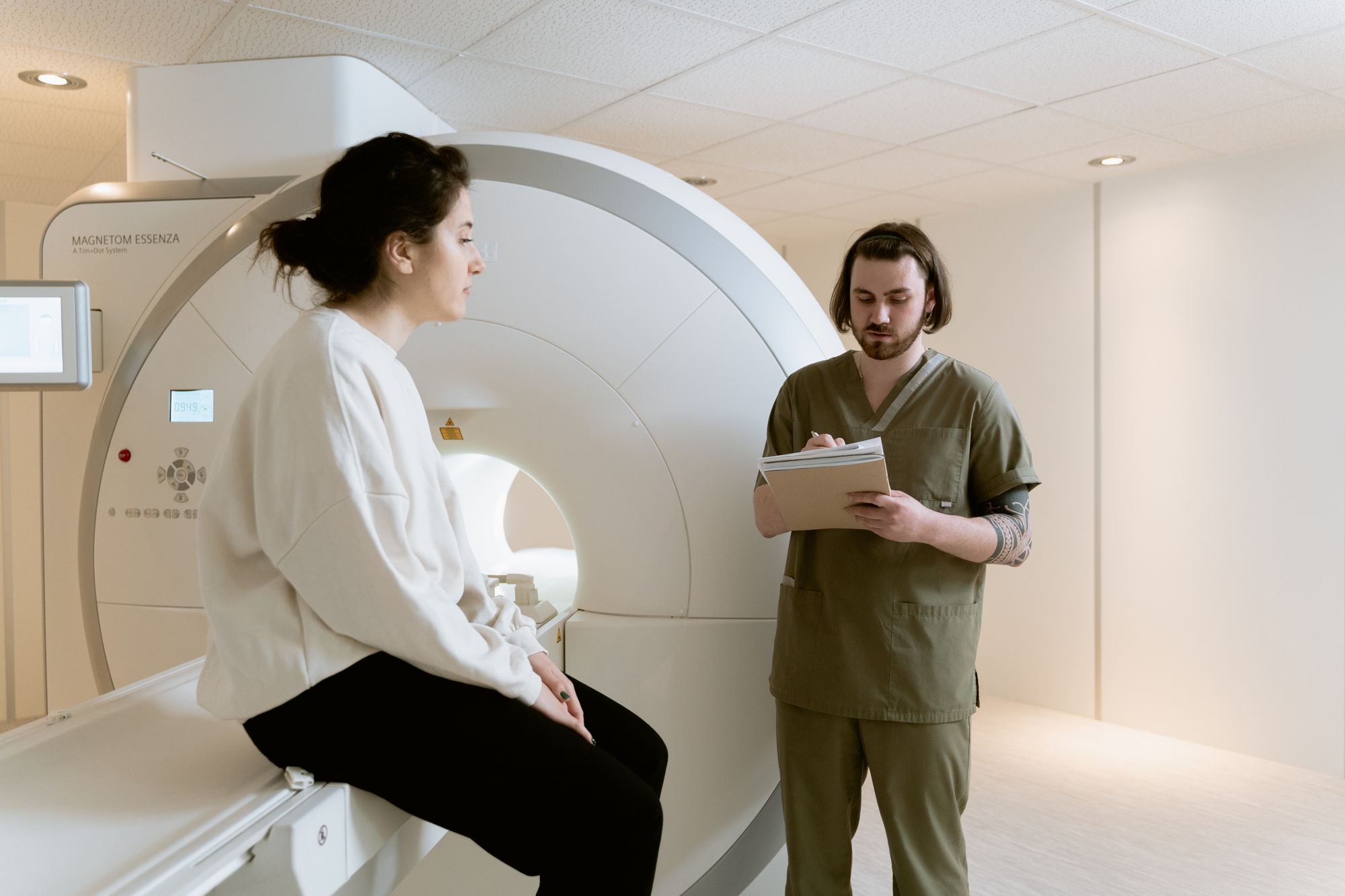
MRI technologists operate scanners and guide patients through imaging procedures. They typically need an associate degree and usually several years of related work experience.
The work is structured, but schedules vary. Some roles include evenings, weekends, or overnight shifts because imaging may be needed around the clock.
If you prefer equipment, protocols, and one-on-one patient contact, MRI work may be worth comparing with sonography.
5. Signal and track switch repairer
Median pay: USD 92,460
Typical education: High school diploma + on-the-job training
Best for: People who prefer technical work over customer-facing work
These workers inspect, test, maintain, and repair railroad signals and switch systems. BLS lists a high school diploma as the typical entry education.
This is one of the clearest no-college options if your main goal is to avoid sales pressure and constant customer contact. These no degree jobs rely more on technical training and safety procedures than on formal college credentials.
The tradeoff is responsibility. Rail systems are safety-critical, so careful work matters.
6. Transportation inspector
Median pay: USD 92,100
Typical education: High school diploma + on-the-job training
Best for: People who like rules, checklists, and independent judgment
Transportation inspectors check equipment or goods used to move people and cargo. BLS lists a high school diploma as the typical entry education.
The work is built around standards and compliance rather than sales targets. Some roles include field work, travel, or serious safety responsibility.
For people who want a no-college path with strong median pay, this is one of the best options on the list.
7. Avionics technician
Median pay: USD 82,280
Typical education: Usually a postsecondary nondegree program
Best for: People who like electronics and troubleshooting
Avionics technicians test and repair aircraft electronic systems. Postsecondary training is common. Some people enter through high school plus training, an associate degree, or military experience.
The work is precise and hands-on. It can also be noisy and safety-sensitive.
Some jobs include nights, weekends, or holidays, so check the schedule before assuming the role will feel low stress.

8. Computer network support specialist
Median pay: USD 76,220
Typical education: Often an associate degree; some qualify with high school + IT certifications
Best for: People who enjoy solving technical problems
Network support specialists help keep computer networks working. Entry requirements vary, and some employers accept a high school diploma plus relevant IT certifications.
This can be a good tech path without a four-year degree, but it is not automatically calm. When a network fails, the pressure rises fast. Some roles also include nights or weekends.
Employer quality matters. A stable internal IT team can feel very different from a high-volume support center.
If tech is your lane, our guide to AI training jobs with no experience gives you another entry-level option.
Which jobs require no college at all?
The cleanest no-college options are transportation inspector and signal and track switch repairer. BLS lists a high school diploma as the typical entry education for both.
For low-stress jobs without a degree, these two are among the strongest true high-school-entry options in the list. Avionics and computer support are more mixed because some employers prefer postsecondary training or certifications.
The healthcare jobs on this list usually require an associate degree, certificate, license, or a mix of these.
Popular picks to treat with caution
You will often see web developer, cybersecurity analyst, elevator installer, power-line installer, trucking, and self-employed beauty jobs on lists like this.
Some can be great careers. We would not group them all together as easy, low-stress wins.
BLS currently lists a bachelor’s degree as the typical entry education for several higher-paying tech roles, including information security analysts. Other jobs can pay well but involve heights, emergencies, irregular hours, or income that depends on self-employment.
That does not make them bad options. It means the stress tradeoff is different.
How to choose the right path
1. Pick the stress you want less of. Do you want fewer customer conflicts? A steadier schedule? Less physical risk? More independent work?
2. Check local requirements. Review job postings, state licensing rules, and the credentials employers actually ask for.
3. Price the training. Compare tuition, exam fees, licensing, commute costs, and how long it takes before you can apply.
4. Test the market first. Review 20 to 30 local openings. Track pay, shifts, credentials, and experience requirements.
This gives you better information than a viral post promising six figures after one short course.
For a wider job-search plan, use our job search tips for recent graduates and browse our Career guides.
Want a simpler way to start?
If the job search already feels like a second job, grab the free Job Search Playbook. It gives you a practical process so you are not relying on job boards alone.
Once you start applying, these job follow-up email templates can save time too.
The bottom line
The strongest low-stress jobs that pay well without a degree are not always the jobs with the highest salary. The better choice is the one whose schedule, people contact, physical demands, and responsibility fit you.
If you want no college, start with transportation inspection or rail signal work. If a two-year program is realistic, healthcare opens more high-paying options.
Verify the training path and local job market before spending money on a program.
FAQ
What are the best low-stress jobs that pay well without a degree?
Strong options include radiation therapist, dental hygienist, sonographer, MRI technologist, transportation inspector, rail signal repairer, avionics technician, and computer network support specialist. The best fit depends on the type of stress you want to avoid.
What are high-paying low-stress jobs for people without a college degree?
Transportation inspector and signal and track switch repairer are two of the clearest options because BLS lists a high school diploma as the typical entry education. Avionics and computer support can also have flexible entry paths.
What is the lowest-stress job that pays well?
There is no single winner. A structured healthcare role may suit someone who likes routines, while inspection work may suit someone who prefers rules and less customer contact.
Can you get a low-stress job that pays well without a degree?
Yes. Some roles require only high school plus training. Others require a certificate or associate degree but no four-year bachelor’s degree.
How can you find a low-stress job that pays well without a degree?
Start by defining the stress you want to avoid. Then compare local pay, training, schedule, licensing, and employer requirements before committing.
What low-stress jobs pay over 50k without a degree?
Every role in this article has a national median above USD 50,000. Starting pay may be lower, so compare local openings before making a decision.
Sources
- U.S. Bureau of Labor Statistics: Healthcare Occupations
- U.S. Bureau of Labor Statistics: Radiation Therapists
- U.S. Bureau of Labor Statistics: Data for Occupations Not Covered in Detail
- U.S. Bureau of Labor Statistics: Aircraft and Avionics Equipment Mechanics and Technicians
- U.S. Bureau of Labor Statistics: Computer Support Specialists
- U.S. Bureau of Labor Statistics: Computer and Information Technology Occupations
Get the free Job Search Playbook
Stop relying on crowded job boards. Get the free 7-day playbook with practical tools, outreach scripts, and a step-by-step plan to find better opportunities.