How to Save Money Fast on a Low Income: A Realistic, Shame-Free Plan

If you are trying to figure out how to save money fast on a low income, you have probably already heard the greatest hits:
- “Just stop buying coffee.”
- “Have you tried budgeting?”
- “Could you simply make more money?”
Wow. Groundbreaking. Please hold while we whisper “cancel my student loans” into a mason jar.
If you have been searching for answers on how to save money on a low income, here is the deal: it is less about building the world’s most beautiful spreadsheet and more about freeing up cash flow quickly, stopping money leaks, and building a small buffer so every weird car noise does not become a five-act financial tragedy.
You do not need to become a financial monk. You need a plan that still works when you are tired, busy, and one unexpected bill away from spiraling.
Get the free subscription audit
One Google Sheet, 70+ services pre-loaded. Find what you’re paying for and forgot about in under 20 minutes. No shame, no spam. Unsubscribe anytime.
Key Takeaways
- The first step in saving money fast on a low income is setting a goal and deadline.
- Review three to six months of transactions and complete a full subscription audit.
- Check various assistance options before cutting essential expenses.
- Focus on housing, insurance, utilities, medical costs, and other large bills first.
- Use grocery markdowns, pantry weeks, store brands, and packed lunches to save money.
- Keep emergency savings in a separate high-yield savings account.
- Avoid “money-saving” ideas that create debt, legal problems, unsafe choices, or a larger bill next month.
How to Save Money on a Tight Budget: Start With One Clear Goal
“Save more money” is not a plan. It is a vague wish wearing business casual.
When you are learning how to save money fast on a low income, pick one target instead of trying to fix your entire financial life by Tuesday.
Your first goal could be:
- A $300 starter emergency cushion
- A $500 car-repair fund
- A security deposit
- An upcoming medical expense
- One month of essential bills
- Your first $1,000 emergency fund
Work Backward From the Deadline
Use this formula:
Savings goal ÷ number of months = monthly savings target
|
Savings goal |
Deadline |
Amount needed |
|---|---|---|
|
$300 |
3 months |
$100 per month |
|
$500 |
6 months |
About $84 per month |
|
$1,000 |
12 months |
About $84 per month |
|
$1,000 |
52 weeks |
About $19 per week |
|
$1,000 |
24 paychecks |
About $42 per paycheck |
Now compare that number with your actual cash flow. If it does not fit, extend the deadline, choose a smaller first milestone, or use the strategies below to close the gap.
The Consumer Financial Protection Bureau recommends setting a specific savings goal, monitoring progress, and using consistent or automatic contributions where possible. It also makes an important point: even a small buffer can help with an unexpected expense.
Make It Make Sense
Saving $1,000 does not have to be one giant decision. It can be:
- $84 a month for one year
- $42 from each twice-monthly paycheck
- About $19 a week
Still too high? Start with $100. A goal you can reach beats a goal that looks impressive and quietly dies in your Notes app.
Recover Money That Is Already Slipping Away
Before cutting every enjoyable thing in your life, find the money you are already spending without getting much value back.
Complete a Full Subscription Audit
Review at least three to six months of bank and credit card statements. One month will not catch annual renewals or the app you forgot existed until it charged you $49.99 at 2:14 a.m.
Check for:
- Streaming and music platforms
- Apps and software
- Cloud storage
- Delivery memberships
- Gym and fitness services
- Gaming subscriptions
- Dating-app upgrades
- Paid newsletters
- Forgotten free trials
- Annual memberships
- Services already included through work, school, your phone plan, or another subscription
For each charge, ask:
- Did I use this in the last 30 days?
- Would I sign up for it again today?
- Am I paying for the same benefit somewhere else?
- Can I pause it?
- Is there a cheaper plan?
For entertainment, rotate services instead of stacking them. Paying for six platforms while rewatching the same comfort show is not diversification.
Your Next Step
Use the free No Stress Adulting Subscription Audit to find forgotten recurring charges and calculate how much you could redirect toward your savings goal.
Start the Free Subscription Audit
Return Purchases While You Still Can
Look for unworn clothing, unopened household products, duplicate purchases, unused beauty items, cancelable reservations, and anything bought during a temporary lapse in judgment sponsored by a countdown timer.
Check the return window now. Future You does not need another decorative appliance and a receipt that expired yesterday.
Search for Unclaimed Money
State governments may be holding money from old bank accounts, utility deposits, unpaid wages, insurance payments, pensions, tax refunds, or matured savings bonds.
USAGov explains where to search for unclaimed money and recommends checking every state where you have lived. There is no single database for everything, so this may take a few searches. Still, “possibly free money from your old utility deposit” is a decent use of 15 minutes.
Check Whether You Qualify for Financial Assistance
If you are researching how to save money fast on a low income, do not skip assistance programs. Reducing a $150 grocery, medical, or utility expense will usually do more than cutting 30 tiny purchases and resenting all of them.
Start with the USAGov benefit finder, 211, and your state social-services agency. Depending on your circumstances, help may be available for:
- Food
- Health coverage
- Utilities
- Housing emergencies
- Childcare
- Transportation
- College emergency costs
Do not assume you earn too much without checking. Eligibility can depend on your state, household size, income type, pregnancy, disability, age, and other circumstances.
Check Food and Health Programs
The USDA explains current SNAP eligibility, while WIC may help people who are pregnant, recently pregnant, breastfeeding, or caring for a child under five.
For health coverage, Medicaid and CHIP applications are open year-round. Community health centers may also use income-based sliding-fee discounts. Translation: before deciding health care is simply “not in the budget,” check what support exists.
File Your Taxes Without Paying Unnecessary Fees
For the 2026 filing season, IRS Free File offers guided federal filing to eligible taxpayers with 2025 adjusted gross income of $89,000 or less. Some partners may charge for state filing, so read the offer details before clicking through.
Also check whether you qualify for the Earned Income Tax Credit, education credits, child-related credits, or state and local programs. A tax credit can outperform an entire year of arguing with yourself about coffee.
Lower the Bills Taking the Biggest Bite
The most effective path to how to save money fast on a low income usually runs through the biggest expenses first. You cannot “coupon your rent,” but you can look for realistic ways to lower the total cost.
Review Your Housing Costs
Depending on your situation, consider:
- Adding a roommate, when safe and permitted
- Moving to a cheaper unit after the lease ends
- Renting a room instead of an entire apartment
- Moving closer to work if transportation savings justify it
- Comparing the full cost of moving before relocating
Do not compare rent alone. Deposits, application fees, moving costs, utility setup, furniture, transportation changes, and missed work can turn a “cheaper apartment” into an expensive side quest.
Renegotiate at Lease Renewal
Landlords do not always agree, but asking costs nothing. You may have more leverage if you pay on time, take care of the property, and save the landlord the cost and hassle of finding a new tenant.
You can ask for:
- A smaller rent increase
- A longer lease at a lower monthly rate
- Reduced parking or pet fees
- A waived renewal or administrative fee
- Another concession if the base rent cannot change
.jpg?token=eyJraWQiOiJzdG9yYWdlLXVybC1zaWduaW5nLWtleV8yNzIwYzE2OC0wMDRlLTQzZDItYjk3Yi03ZWQzMDE4NzU5NzciLCJhbGciOiJIUzI1NiJ9.eyJ1cmwiOiJ1c2VyLWdlbmVyYXRlZC1pbWFnZXMvYWM1ZDA2MmYtODM1OS00N2Q5LThlZjgtNTVjZTAxMzNlODI1L3BleGVscy1iYWJ5ZG92LTc3ODg2NzggKDEpLmpwZyIsInNjb3BlIjoiZG93bmxvYWQiLCJpYXQiOjE3ODU0NDk1MjMsImV4cCI6MjEwMDgwOTUyM30.ohzMihyw3Fum28fzaTkAY9QQ20dDB2tAo-oDudf3UXo)
Use this script and adjust it to your situation:
“Hi [Name], I would like to renew, but the proposed rate is outside my budget. I have paid on time and taken good care of the unit. Is there any flexibility on the increase, or could we discuss a longer lease at a lower monthly rate? If the rent cannot change, would you be open to reducing parking, pet, or other monthly fees? I would prefer to stay if we can find an option that works for both of us.”
Only claim things that are true. “I have paid on time” loses some sparkle when the payment history says otherwise.
Consider a Temporary, Legal Sublet
If you will already be away for several weeks, a legal sublet or temporary rental may offset part of your rent. But this is not a “post it first, ask questions later” situation.
Check your lease, get written landlord permission, talk to roommates, review local short-term rental laws, and confirm taxes, permits, cleaning costs, and insurance. Airbnb itself tells renters to check contracts, get permission, understand local rules, and speak with an insurer.
Secretly listing your apartment is not a savings hack. It is a housing crisis speedrun.
Call Phone and Internet Providers
Ask for the cheapest plan that still covers what you actually use. Also ask about removing add-ons, retention offers, prepaid options, slower internet tiers, and income-based programs.
The federal Lifeline program offers eligible households a monthly discount of up to $9.25 on qualifying phone, internet, or bundled service, with enhanced support on qualifying Tribal lands.
Reduce Utility Costs
Ask your utility provider about income-based rates, payment plans, budget billing, due-date changes, and free energy assessments.
The Low Income Home Energy Assistance Program may help eligible households with heating and cooling costs. Applications and benefits vary by location.
At home, keep it simple: wash suitable clothes in cold water, run full loads, adjust heating or cooling when nobody is home, and report suspiciously high bills or leaks. You do not need to unplug every lamp like you are preparing for an electrical apocalypse.
Re-Shop Insurance
Compare auto and renters insurance, bundle options, deductibles, annual mileage, and employer or membership discounts. Update the insurer if you drive less, work from home, moved, or installed qualifying safety equipment.
Do not remove essential coverage simply to lower the monthly bill. Saving $20 and risking $20,000 is not the plot twist we are looking for.
Align Bill Due Dates With Payday
Some credit cards, utilities, phone companies, insurers, and lenders allow due-date changes. The CFPB specifically recommends managing the timing of money coming in and going out and asking creditors whether dates can be adjusted.
This does not lower the bill, but it may reduce late payments, overdrafts, and the classic “I get paid Friday, but everything is due Thursday” nonsense.
Stop Avoidable Bank Fees
Check for monthly maintenance charges, minimum-balance fees, overdraft fees, nonsufficient-funds fees, and out-of-network ATM fees.
The CFPB explains your overdraft options, including opting out of debit-card and ATM overdraft coverage. Checks and recurring electronic payments can work differently, so review your bank’s terms before making changes.
There is no loyalty award for paying a bank to hold money you barely have.
Reduce Medical and Credit Costs
Ask About Medical Financial Assistance
When a medical bill arrives, request an itemized statement, compare it with your insurance explanation of benefits, and check for duplicates, incorrect services, or charges insurance should have covered.
Then ask about financial assistance, charity care, a pause on collections during review, and an interest-free payment plan. The CFPB has a practical guide to finding help with medical bills.
Think twice before moving the balance onto a high-interest credit card. You could replace a negotiable medical bill with debt that is much less flexible and much more annoying.
Compare Prices Before Planned Medical Care
If you do not have insurance or choose not to use it, you can generally ask for a written good-faith estimate before scheduled care. Under federal rules, you may be able to dispute a provider’s bill when it is at least $400 above that provider’s estimate. CMS explains the good-faith estimate and dispute process.
Pay Credit Cards in Full When You Can
Cash back and airline miles are only valuable when interest and fees are not eating them alive.
Most cards offer a grace period on purchases. If your card does and you are not carrying a balance, paying the full statement balance by the due date can prevent interest on new purchases.
If you already carry a balance, make at least the minimum payment on every card, stop spending extra for rewards, and direct additional money toward expensive debt while keeping a small emergency cushion.
Save on Groceries Without Living on Misery Meals
Food is one of the more flexible expenses when you are saving on a tight budget. Still, cutting too aggressively can lead to sad meals, wasted ingredients, and emergency takeout. Nobody wins, except the delivery app.
Learn Your Grocery Store’s Markdown Schedule
When planning how to save money fast on a low income, ask grocery employees when meat, bakery items, prepared foods, and produce are normally marked down. Shop shortly after markdowns are applied and freeze suitable food promptly if you will not use it soon.
The USDA recommends refrigerating or freezing perishables promptly and using refrigerated leftovers within three to four days. You can review its leftover safety guidance before turning your freezer into a mystery archive.
Pair markdown shopping with:
- Store loyalty offers
- Unit-price comparisons
- Generic or store-brand products
- Clearance shelves
- Food-rescue apps, where available
A discount on something unnecessary is not a saving. It is retail wearing a fake mustache.
Run a Pantry and Freezer Week
For five to seven days, buy only essential fresh items and build meals around food already at home. Use frozen leftovers, move older products to the front, and plan from ingredients instead of choosing a recipe that requires 12 new purchases and an emotional-support herb garden.
A pantry week cuts spending immediately and reveals which foods you keep buying but never eat. Apparently, owning four open bags of rice is not portfolio diversification.
Pack Lunch a Little More Often
You do not need to pack lunch every day. Start with one or two extra days each week.
If packing lunch saves $5 twice a week, that adds up to about $520 a year. Leftovers, sandwiches, wraps, soup, pasta salad, and snack-style lunches all count. Choose food you will actually want at noon, or you may buy lunch anyway while your packed meal becomes office-fridge archaeology.
Compare Unit Prices
A larger package is not automatically cheaper. Compare the price per ounce, pound, serving, or individual item.
Buying in bulk only saves money when the unit price is lower, you have storage space, and the product will be used before it expires. A warehouse-sized box of something nobody likes is not a bargain. It is clutter with a membership card.
Find Furniture and Household Essentials for Free
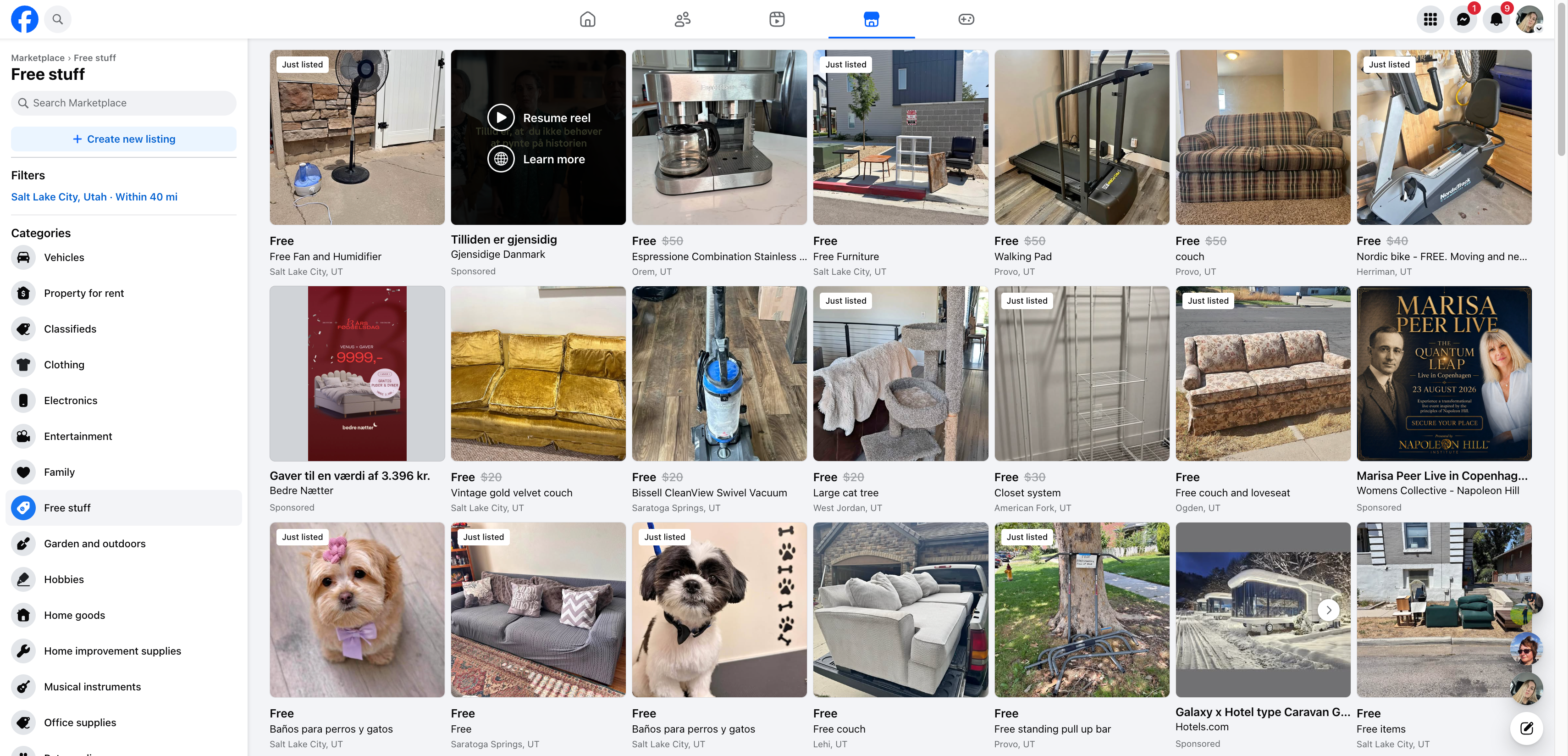
Before buying furniture, kitchenware, décor, moving boxes, appliances, or tools, check:
- Facebook Marketplace’s free category
- Local “Free Stuff” Facebook groups
- College move-out events
- Local reuse centers
Inspect everything carefully. Be especially cautious with mattresses, upholstered furniture, helmets, car seats, recalled products, and electrical items with an unknown history.
Free is excellent. Free bedbugs are less of a bargain.
Have a Social Life Without Paying Full Price
Some of the best ways to save money on a tight budget replace paid entertainment rather than deleting fun from the calendar.
Search for Free and Low-Cost Events
Check Facebook Events, Meetup, Bandsintown, libraries, museums’ free-admission days, parks departments, universities, community centers, public lectures, and outdoor concerts.
Meetup and Bandsintown help with discovery, but not everything listed is free. Check the price before emotionally committing to an evening out.
Volunteer at Festivals
Some festivals offer volunteers free admission, food, merchandise, or access during off-shift hours. Before signing up, ask how long the shift lasts, whether admission is included, whether a deposit is required, and whether you can attend the part you actually care about.
Volunteering for eight hours to avoid a $20 ticket is not automatically a win. Do the math. Your time also has a price tag, even if nobody put it on a shelf.
Use Your Library Like a Subscription Bundle
Depending on the local system, your library card may include e-books, audiobooks, movies, streaming, Wi-Fi hotspots, museum passes, tools, classes, workshops, and free events. The American Library Association has resources on library hotspot-lending programs, though services vary by location.
Before paying for a book, course, museum ticket, hotspot, or rarely used tool, check your library. Libraries have been quietly doing adulting support while the rest of the internet argues about morning routines.
Slow Down Impulse Spending
Use the 24-Hour Rule
When you want a nonessential item, save it to a wish list instead of checking out immediately.
- Under $25: wait until tomorrow.
- $25 to $100: wait at least 24 hours.
- Over $100: wait 72 hours or one week.
Then ask:
- Do I still want it?
- Do I own something similar?
- Which savings goal would this delay?
- Would I buy it without the sale countdown?
- Can I borrow it or find it secondhand?
You are not banning purchases. You are giving your rational brain enough time to return from lunch.
Use Coupon Extensions Carefully

Browser tools such as PayPal Honey may test available coupon codes at checkout. They do not guarantee the lowest possible price.
Use them only for purchases you already planned. Compare the full price elsewhere, including shipping, check the return policy, download extensions from official sources, and review their privacy terms.
A coupon is not a saving if it invents a purchase you were not planning to make.
Make Saving Automatic and Easy to See
Once you understand how to save money fast on a low income, give the money you free up somewhere specific to go. Otherwise, “I saved $30” has an impressive habit of turning into “apparently I spent $30 on snacks and parking.”
Keep Savings in a Separate High-Yield Savings Account
A high-yield savings account, or HYSA, usually pays a more competitive interest rate than a basic savings account. More importantly, it separates savings from the money you use every day.
Look for:
- No monthly maintenance fee
- No minimum balance, or one you can comfortably meet
- A competitive annual percentage yield
- Easy transfers
- No complicated earning conditions
- FDIC or NCUA insurance
The FDIC explains that eligible deposit accounts at insured banks are generally covered up to $250,000 per depositor, per ownership category, at each insured bank.
Rates change, so compare current terms. Also, do not invest money you may need for a genuine emergency. Emergency savings should be safe and available, not exciting.
Automate a Small Transfer After Payday
Once your HYSA is open:
- Open your banking app.
- Choose transfers.
- Select checking as the source.
- Select your HYSA as the destination.
- Choose a small amount.
- Make the transfer recurring.
- Schedule it one or two days after payday.
- Turn on low-balance alerts.
Start with $5 a week, $10 per paycheck, $20 a month, or the cost of a subscription you canceled. The CFPB describes automatic transfers as one of the easiest ways to make saving consistent, but it also warns people to watch their checking balance so the transfer does not trigger an overdraft.
An automatic transfer you reverse every month is not automation. It is a recurring argument with yourself.
Save Your Coins
Option 1: Use Your Bank’s Roundup Feature
Some banks and credit unions round eligible debit-card purchases to the next dollar and move the difference into savings.
Example:
- You spend $7.40.
- The transaction rounds to $8.
- The remaining 60 cents moves to savings.
Search your banking app for “roundups,” “save the change,” or “automatic savings.” Check for fees and monitor your checking balance.
Do not spend extra to generate more roundups. That is just spending with extra choreography.
Option 2: Save Physical Coins
Put physical coins into a container, count them monthly or quarterly, and deposit them through a bank or credit union that accepts coins without a large fee.
Saving 50 cents a day adds up to $182.50 a year. It will not create a full emergency fund, but it can build a useful starter cushion.
Save Part of Unexpected Money
Unexpected money may include tax refunds, rebates, birthday money, overtime, reimbursements, cash gifts, refunds, or returned deposits.
Decide on the split before the money arrives. For example:
- 50% to savings
- 30% to urgent expenses or debt
- 20% to enjoy
Adjust the percentages to fit your life. You are allowed to use some money for something enjoyable. The goal is to make progress without making your life feel like a punishment.
Track Progress Visually
Use your banking app, a spreadsheet, a printable tracker, a Notion page, or a simple progress bar.
$160 is not “only $160.” It is 53% of a $300 goal. Same number, much better energy.
A Seven-Day Save-Money-Fast Plan
This plan turns how to save money fast on a low income into actual actions rather than another article you save, admire, and never open again.
|
Day |
Action |
|---|---|
|
Day 1 |
Choose your savings goal, deadline, and required weekly or monthly amount. |
|
Day 2 |
Review three to six months of transactions and complete a full subscription audit. |
|
Day 3 |
Contact phone, internet, utility, insurance, and credit providers about cheaper plans or better due dates. |
|
Day 4 |
Check benefits, SNAP, Medicaid, Lifeline, energy assistance, free tax help, and unclaimed money. |
|
Day 5 |
Plan a pantry week, learn your store’s markdown schedule, compare unit prices, and pack two lunches. |
|
Day 6 |
Check free-item groups, libraries, local events, and festival volunteer opportunities. Return eligible purchases. |
|
Day 7 |
Open a separate HYSA, schedule a small transfer after payday, and start tracking progress. |
You are not completing a full financial makeover in one week. You are creating traction. Big difference.
Money-Saving Moves That Can Backfire
Be cautious with:
- Payday loans
- Car-title loans
- Buy Now, Pay Later for ordinary bills
- Carrying credit card debt to earn rewards
- Canceling essential insurance
- Skipping medication or necessary medical care
- Buying extra items because they are discounted
- Secretly subletting your rental
- Paying upfront fees to claim benefits or unclaimed money
- Moving without calculating the full cost
- Locking emergency money into risky or inaccessible investments
The Federal Trade Commission warns that payday and car-title loans can be extremely expensive and trap borrowers in debt.
A tactic is not saving you money if it creates a bigger bill next month. That is not frugality. That is tomorrow’s problem wearing today’s sunglasses.
Final Thoughts
Learning how to save money fast on a low income is not about becoming a different person or cutting every enjoyable expense.
Start with one clear target. Work backward. Then focus on changes that genuinely improve your cash flow: recurring expenses, major bills, assistance programs, groceries, medical costs, and simple automatic savings.
When you are saving on a tight budget, progress may look small at first. Small does not mean pointless. A $100 cushion is still $100 standing between you and the next surprise.
Sources
- Consumer Financial Protection Bureau: An Essential Guide to Building an Emergency Fund
- USAGov: Benefit Finder
- Federal Trade Commission: What to Know About Payday and Car-Title Loans
Frequently Asked Questions
How can I save money with a low income?
The practical answer to how to save money on a low income starts with actions that improve cash flow without requiring money upfront. Complete a subscription audit, check assistance programs, compare major bills, search for unclaimed money, review medical charges, and reduce grocery waste.
The core of how to save money fast on a low income is not removing every small pleasure. It is finding the expenses that provide little value and redirecting that money toward one specific goal.
How do I save money on a tight budget when nothing is left after bills?
Start with strategies that do not require spare cash:
- Check government and community assistance.
- Audit every recurring payment.
- Move to cheaper phone, internet, insurance, or utility plans.
- Ask about medical financial assistance.
- Search for unclaimed property.
- Align due dates with payday.
- Review housing, transportation, banking, and insurance costs.
Automatic saving comes later, after you create a little breathing room.
What are the best ways to save money on a tight budget?
The strongest options usually include reducing major bills, completing a full subscription audit, applying for eligible benefits, planning groceries around markdowns and food already at home, using free library and community resources, and automating a small amount into a separate savings account.
How can I save $1,000 on a low income?
Break the goal into smaller amounts:
- About $84 per month for 12 months
- About $42 per twice-monthly paycheck
- About $19 per week
Then combine recurring savings with one-time money such as refunds, rebates, returned purchases, unclaimed property, and canceled subscriptions. If those amounts still do not fit, extend the deadline or begin with a $100 or $300 milestone.
Should I build savings or pay off debt first?
Keep making at least the required minimum payment on every debt. At the same time, consider building a small emergency cushion so the next unexpected cost does not immediately go back onto a credit card.
After that, direct more money toward high-interest debt while maintaining a modest savings habit. The right balance depends on your interest rates, job stability, essential expenses, and access to emergency support.
Where should I keep emergency savings?
Keep it in a safe, accessible account separate from everyday spending. A no-fee HYSA with FDIC or NCUA insurance can work well. Avoid putting emergency money into investments that can fall in value or accounts that make access slow or expensive.
Do purchase roundups actually help?
Roundups can help build a small habit, but they are not free money. The difference still comes from checking. Use them only when the service has no fee, your checking account has a buffer, and you do not spend extra just to create more roundups.
What is the quickest step I can take today?
Open your bank and credit card statements from the last three months and list every recurring charge. Cancel or pause anything you no longer use, then move the first amount saved into a separate account.
Important: This article is for general educational purposes and is not personalized financial, investment, tax, legal, or other professional advice. Rules, rates, products, and eligibility can change, and your circumstances may be different. Check current information with the relevant official source and consider qualified professional advice when making decisions specific to your situation.
Get the free subscription audit
One Google Sheet, 70+ services pre-loaded. Find what you’re paying for and forgot about in under 20 minutes. No shame, no spam. Unsubscribe anytime.